















Product Description
SENTRY™ Pulsation Dampeners & Surge Suppressors
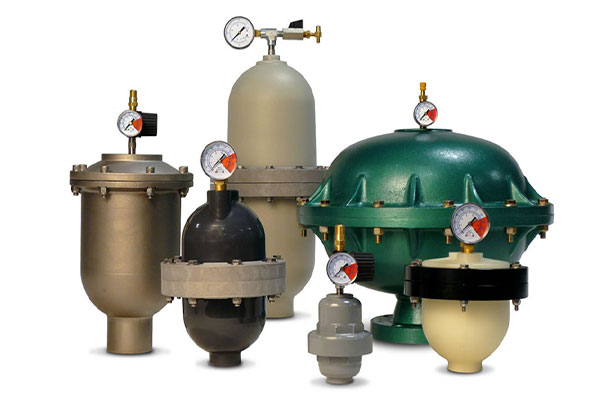
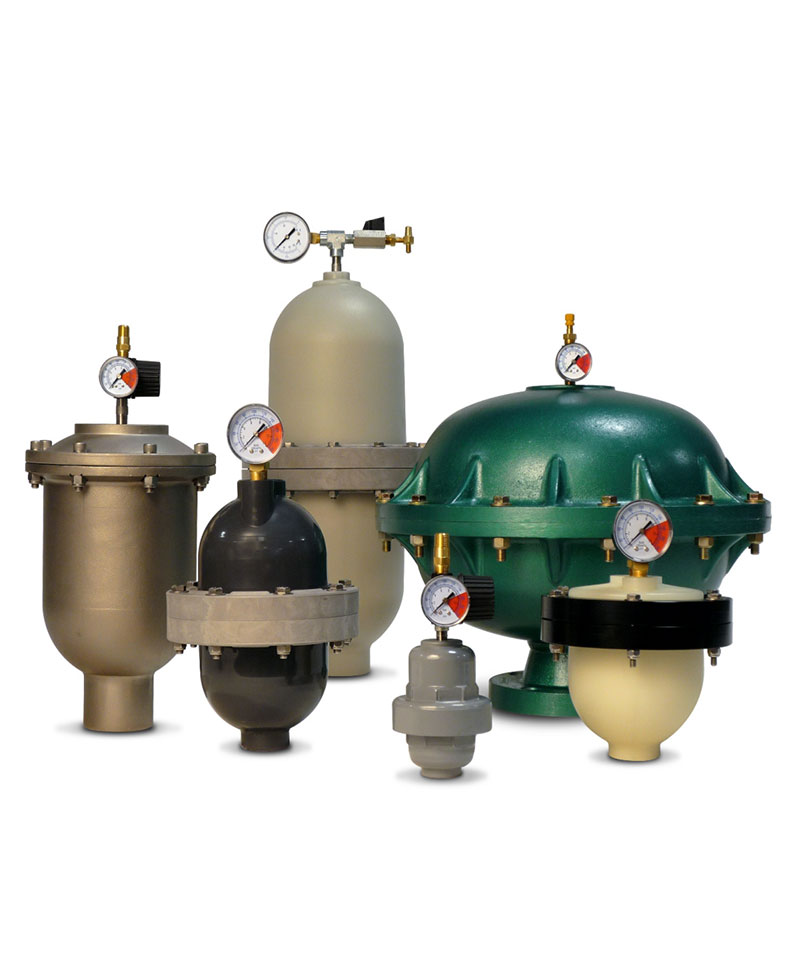
The SENTRY™ Pulsation Dampeners & Surge Suppressors protect fluid-handling systems from pressure fluctuations created by positive-displacement pumps.
During the pump discharge stroke, the dampener receives and stores part of the process fluid. Afterwards, it releases that fluid as pump pressure falls. Consequently, downstream flow becomes smoother and pressure variation is reduced.
Moreover, surge suppressors absorb energy caused by rapid changes in fluid velocity. Therefore, they help control water hammer resulting from pump startup, shutdown, fast-closing valves or sudden flow-direction changes.
Why Pump Pulsation Must Be Controlled
Positive-displacement pumps move fluid in repeated strokes or cycles. As a result, their discharge flow can create pulsating pressure instead of perfectly continuous flow.
Uncontrolled pulsation may cause:
- Pipe movement and vibration
- Excessive operating noise
- Pressure-gauge fluctuation
- Reduced flow-meter accuracy
- Stress on valves and fittings
- Premature component wear
- Product foaming or splashing
- Pump inefficiency
- Hydraulic shock
- Unplanned maintenance
Therefore, installing a correctly sized dampener can improve system reliability and operating stability.
Key Benefits
- Reduces discharge-pressure pulsation
- Controls hydraulic shock and water hammer
- Minimises piping vibration and fatigue
- Protects pumps, valves and fittings
- Improves pressure-gauge stability
- Supports more accurate flow measurement
- Produces smoother downstream flow
- Reduces product agitation and foaming
- Improves chemical-dosing consistency
- Supports spraying and coating uniformity
- Handles viscous and abrasive fluids
- Simplifies inline installation
- Supports straightforward maintenance
- Offers multiple air-control options
- Includes factory pressure testing
Together, these benefits can reduce mechanical stress throughout the pumping system. Moreover, smoother flow can improve the performance of downstream instruments and process equipment.
Pulsation Dampener Operation
The dampener contains a flexible bladder that separates the process fluid from the compressed gas charge.
When discharge pressure rises, process fluid enters the dampener and compresses the gas behind the bladder. Subsequently, when system pressure falls, the compressed gas pushes stored fluid back into the pipeline.
As a result, the dampener absorbs pressure peaks and fills flow gaps between pump strokes. However, effective performance depends on correct sizing and pre-charge pressure.
Blacoh generally recommends an initial discharge-dampener pre-charge of approximately 80% of the expected mean system pressure, followed by adjustment during operation. Nevertheless, the correct setting varies according to the model and application.
Pulsation Dampener or Surge Suppressor?
A pulsation dampener mainly controls repetitive pressure variation generated during normal pump operation.
In contrast, a surge suppressor manages sudden hydraulic events caused by rapid startup, shutdown, valve closure or changes in fluid velocity.
However, both products use stored fluid and compressed gas to absorb system energy. Therefore, correct product selection depends on whether the primary concern is continuous pump pulsation, transient surge or both.
Materials and Connection Options
SENTRY™ units are available in numerous chemically resistant materials, including:
- Polypropylene
- PVC
- CPVC
- PVDF
- PTFE
- Acetal
- Carbon steel
- Stainless steel
- Alloy 20
- Hastelloy C
- Polished stainless steel
Available bladder materials include Buna-N, EPDM, PTFE, neoprene, silicone, Santoprene and Viton on relevant configurations.
Moreover, connection options include FNPT, BSP, ANSI flange, DN flange, socket-weld, union and sanitary Tri-Clamp designs. Therefore, users can configure the dampener according to process compatibility and piping requirements.
Air-Control Options
Chargeable
A chargeable model uses a gas-fill valve and does not require a permanent compressed-air connection. Therefore, technicians can manually charge or bleed the unit to the required pressure.
Automatic
An automatic dampener adjusts as system pressure changes. Moreover, it resets when the pumping system restarts.
Adjustable
An adjustable model remains connected to a compressed-air supply. Consequently, operators can conveniently modify dampener pressure when operating conditions change.
Applications in the UAE
SENTRY™ Pulsation Dampeners may support:
- Chemical dosing systems
- Water and wastewater treatment
- Metering pumps
- AODD pumps
- Peristaltic pumps
- Chemical injection skids
- Oil and gas processing
- Food and beverage production
- Pharmaceutical processes
- Spray and coating systems
- Viscous-fluid transfer
- Abrasive-fluid pumping
For example, a chemical-dosing system can use a dampener to stabilise flow and improve dosing consistency. Similarly, a surge suppressor can protect long pipelines from sudden pressure changes.
Selecting the Correct SENTRY™ Dampener
Correct selection depends on:
- Pump type
- Pump stroke volume
- Flow rate
- Operating pressure
- Pulsation frequency
- Process-fluid compatibility
- Fluid temperature
- Connection size
- Required pressure reduction
- Air-control preference
An undersized unit may not absorb enough energy. In contrast, an oversized unit may respond too slowly to system changes. Therefore, users should size the dampener according to pump displacement and operating conditions.
Request a SENTRY™ Pulsation Dampener in the UAE
Contact our pump specialists for technical selection, specifications and UAE pricing.
Please provide the pump type, flow rate, stroke volume, operating pressure, fluid, temperature, connection size and required pulsation reduction. Consequently, our team can recommend the correct SENTRY™ Pulsation Dampener or Surge Suppressor.