












Product Description
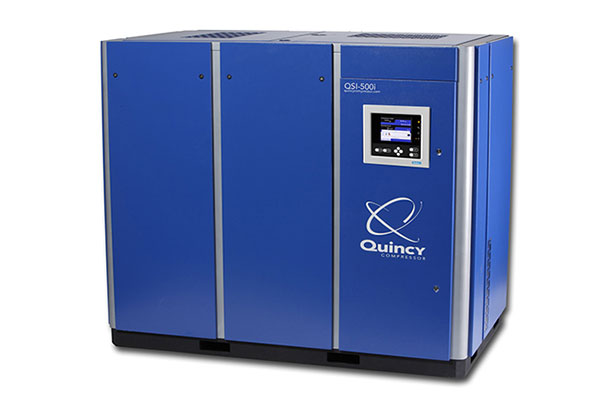
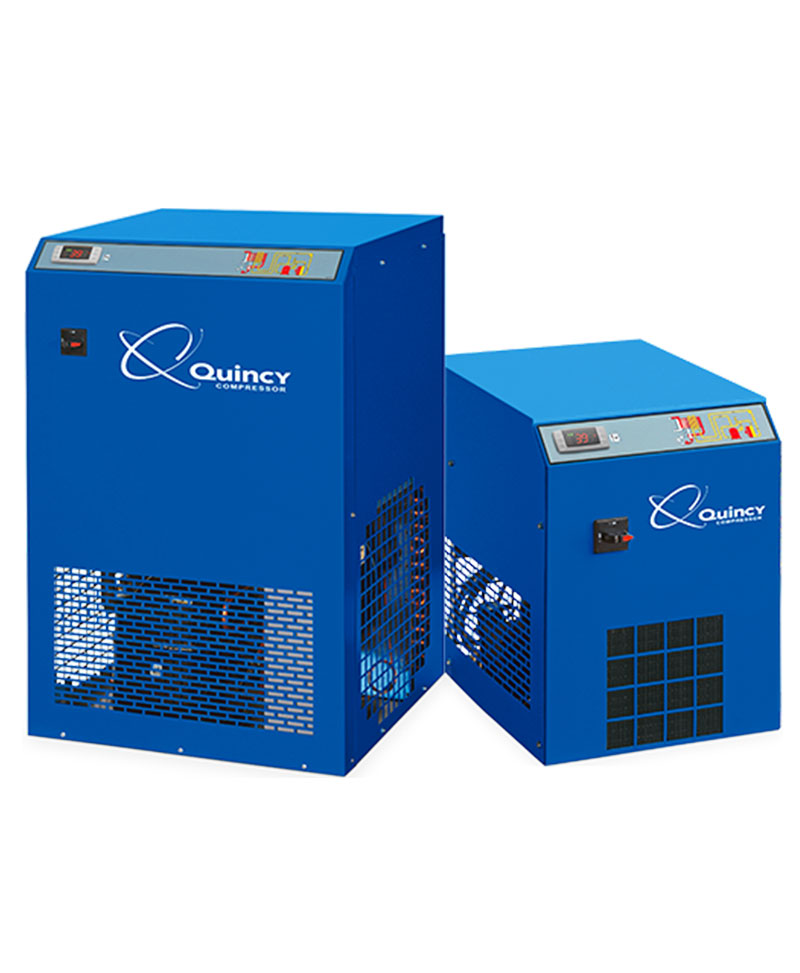
Quincy Refrigerated Dryers
The Quincy Refrigerated Dryers remove water vapour and associated contaminants from industrial compressed air. Therefore, they help protect pneumatic equipment, pipelines, valves, instruments and finished products from moisture-related damage.
During operation, the dryer cools compressed air to approximately 37°F or 2.8°C. Consequently, water vapour condenses into liquid droplets that can be separated and drained from the air stream.
After moisture removal, the outgoing dry air is reheated. As a result, the delivered air has a typical pressure dew point between approximately 35°F and 50°F, depending on the selected dryer and operating conditions.
How Refrigerated Air Drying Works
First, warm compressed air enters an air-to-air heat exchanger. Here, the outgoing cold air pre-cools the incoming air.
Next, the air passes through a refrigerant-to-air heat exchanger. Consequently, its temperature falls to approximately 37°F, causing moisture to condense.
Afterwards, a moisture separator removes the condensed water, oil and dirt. An automatic drain then discharges these contaminants from the dryer.
Finally, the cold dry air passes back through the first heat exchanger. Therefore, the outgoing air is reheated while the incoming air is pre-cooled, improving overall thermal efficiency.
Key Benefits
- Removes condensed moisture from compressed air
- Helps remove carried oil and dirt
- Protects pneumatic tools and machinery
- Reduces corrosion inside air pipelines
- Supports stable industrial processes
- Helps prevent moisture-related product contamination
- Provides pressure dew points around 35°F to 50°F
- Includes automatic condensate drainage
- Offers cycling and non-cycling technologies
- Includes variable-speed energy-saving options
- Supports high-temperature inlet-air applications
- Integrates with Quincy compressors and filtration equipment
- Requires less desiccant-related maintenance
- Provides straightforward automatic operation
Together, these benefits improve compressed-air quality and system reliability. Moreover, selecting the correct dryer technology can reduce operating costs and unnecessary energy use.
Non-Cycling Refrigerated Dryers
Quincy’s QPNC non-cycling dryers are designed for systems with relatively constant airflow demand.
A non-cycling dryer keeps its refrigeration system operating continuously. Therefore, it provides stable performance where the compressed-air load does not vary significantly.
Moreover, the straightforward control arrangement can reduce initial equipment complexity. However, because the refrigeration compressor continues operating during lower demand, energy use may be higher in highly variable systems.
Cycling Refrigerated Dryers
Quincy’s QED Eco Dri cycling dryers switch the refrigeration system on and off according to air demand.
A three-stage heat exchanger provides thermal storage during the off cycle. Consequently, the dryer can continue treating compressed air without running the refrigeration compressor continuously.
Therefore, cycling technology can reduce electricity consumption in facilities with changing airflow requirements.
Variable-Speed Refrigerated Dryers
Quincy’s QPVS variable-speed dryers adjust refrigeration-compressor speed according to incoming airflow demand.
Instead of operating continuously at maximum output, the dryer increases or decreases capacity as required. As a result, it can reduce wasted electricity during partial-load operation.
Quincy reports potential energy savings of up to 60% compared with conventional fixed-speed drying under suitable load conditions. Therefore, QPVS dryers may suit facilities with significant fluctuations in compressed-air demand.
Compact High-Temperature Dryers
Quincy’s QRHT compact high-temperature dryers are intended for applications where compressed air enters the dryer at elevated temperatures.
The published product overview states that suitable models accept inlet temperatures up to approximately 180°F. Therefore, these dryers can support reciprocating compressor systems or installations where a separate aftercooler is impractical.
Why Moisture Removal Matters
Compressed air can carry water vapour, oil aerosols and particles throughout the distribution system. Consequently, untreated air may cause:
- Internal pipe corrosion
- Pneumatic-valve malfunction
- Tool wear and reduced performance
- Product contamination
- Paint and finishing defects
- Instrument failure
- Increased maintenance
- Frozen outdoor air lines
Therefore, installing the correct refrigerated dryer can improve both equipment reliability and production quality.
Applications in the UAE
The Quincy Refrigerated Dryers may suit:
- General manufacturing
- Automotive workshops
- Metal fabrication
- Packaging equipment
- Pneumatic tools
- Food and beverage support systems
- HVAC control systems
- Woodworking facilities
- Printing operations
- Industrial assembly lines
- Warehousing equipment
- General plant compressed air
For example, a non-cycling dryer may suit a workshop with relatively stable air demand. Alternatively, a variable-speed dryer may reduce energy consumption in a manufacturing plant with changing production loads.
Selecting the Correct Refrigerated Dryer
Correct selection depends on:
- Required airflow
- Operating pressure
- Inlet-air temperature
- Ambient temperature
- Required pressure dew point
- Air-demand variation
- Maximum acceptable pressure drop
- Compressor type
- Electrical supply
- Condensate-drain requirements
Therefore, users must apply correction factors when operating conditions differ from the dryer’s rated conditions. Otherwise, the unit may be undersized and unable to maintain the required dew point.
Why Choose Quincy Refrigerated Dryers?
The Quincy Refrigerated Dryers provide several drying technologies for different compressed-air loads and inlet conditions. Moreover, cycling and variable-speed options can reduce energy use where airflow demand changes.
Quincy also provides a free 10-year heat-exchanger warranty on its cycling, non-cycling and high-temperature refrigerated dryers, subject to applicable warranty terms. Therefore, the range offers a dependable solution for UAE facilities requiring cleaner and drier compressed air.
Request a Quincy Refrigerated Dryer in the UAE
Contact our compressed-air specialists for technical selection, specifications and UAE pricing.
Please provide the airflow, operating pressure, inlet temperature, ambient temperature, required dew point and daily demand profile. Consequently, our team can recommend the correct Quincy Refrigerated Dryer configuration.